



As part of its continued efforts to enhance the performance of Egypt’s agricultural inspection and export systems, the EU-ZIRA3A Programme launched the first day of the 10th training under the EIGS Grant, titled:
“Visual Inspection and Sampling Techniques for Citrus.”
The training is implemented under the grant “Enhancing Integrated Governance to Improve the Performance of the Egyptian Plant Quarantine System and Pesticide Monitoring, and Developing a Digital Archiving System (EIGS)”, carried out by Cairo for Development Benchmarking (CDB) within the framework of the EU-ZIRA3A Programme, funded by the European Union and implemented by the Italian Agency for Development Cooperation (AICS Cairo).
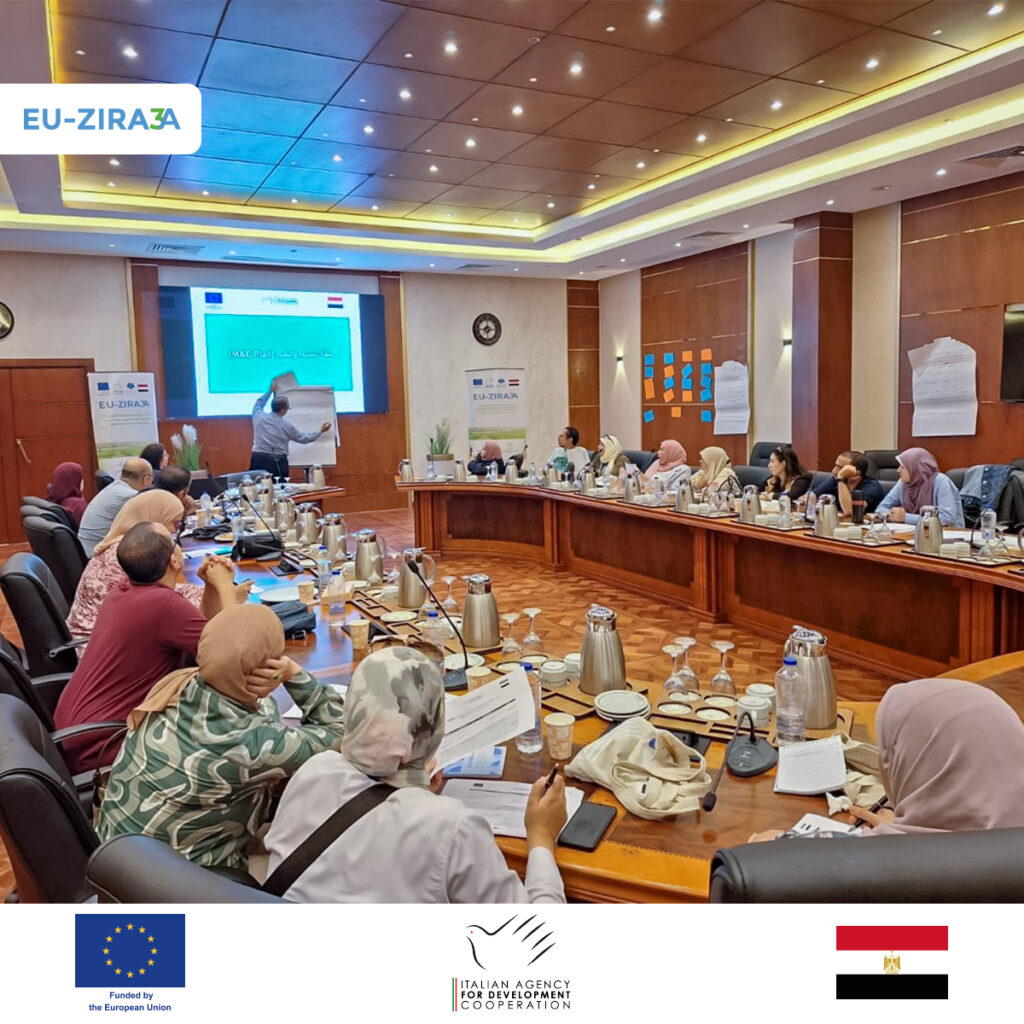
Strengthening Plant Quarantine Capacity
This specialized training targets 48 engineers from the Central Administration for Plant Quarantine, aiming to build their technical competencies in applying international standards for citrus inspection, sampling, pesticide monitoring, and overall export quality assurance.
Through a combination of theoretical instruction, practical demonstrations, and exposure to global best practices, the programme seeks to reinforce Egypt’s readiness to meet the requirements of European and international markets—supporting both agricultural development and export competitiveness.
Day One: Theoretical Sessions
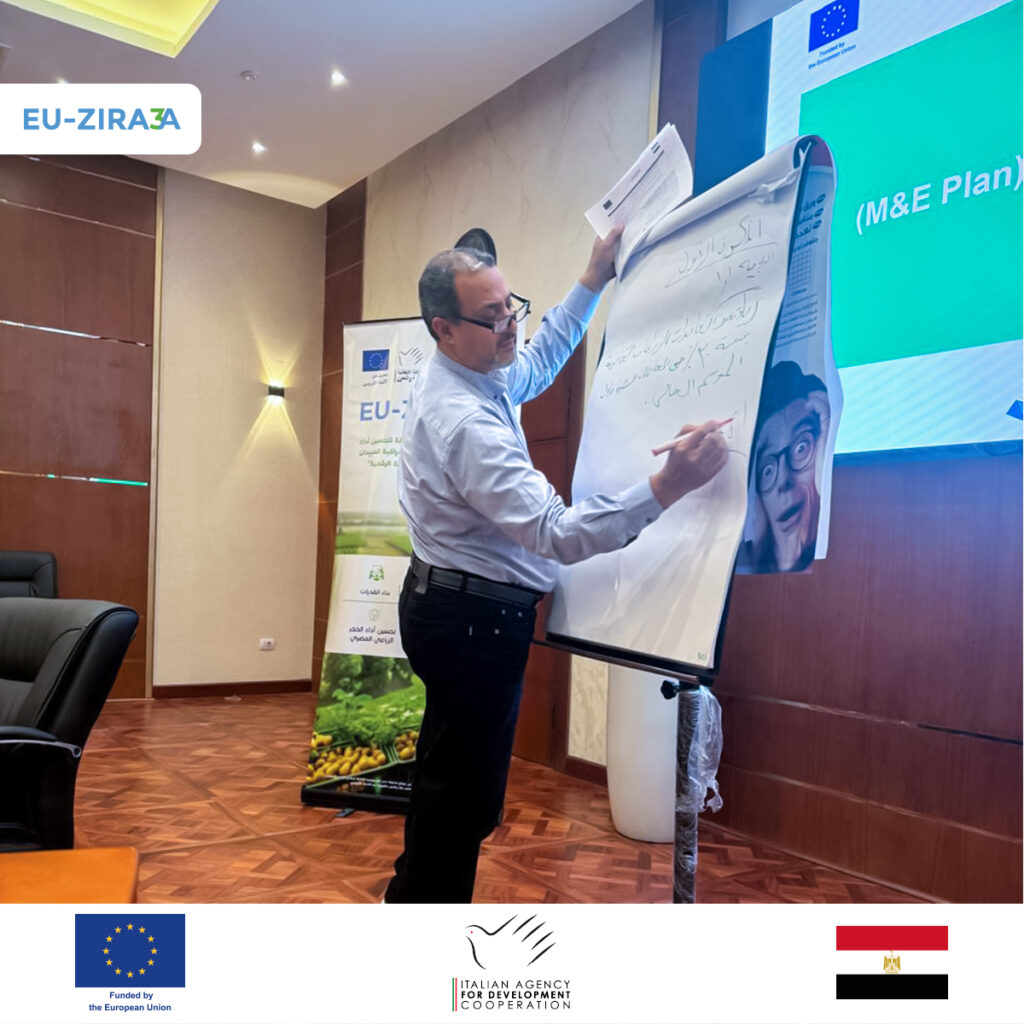
The opening day consisted of a full set of scientific and regulatory learning modules, delivered by Dr. Tarek Abdel Aleem, expert at the Central Laboratory for Pesticides and lead trainer for this workshop.
The theoretical programme included:
- Coding and traceability systems for citrus produce
- Quarantine pests not present inEgypt, with emphasis on early detection and reporting
- Scientific inspection and sampling methods
- Maximum Residue Limits (MRLs) and related compliance measures
- Global G.A.P. standards and their application in export-oriented production
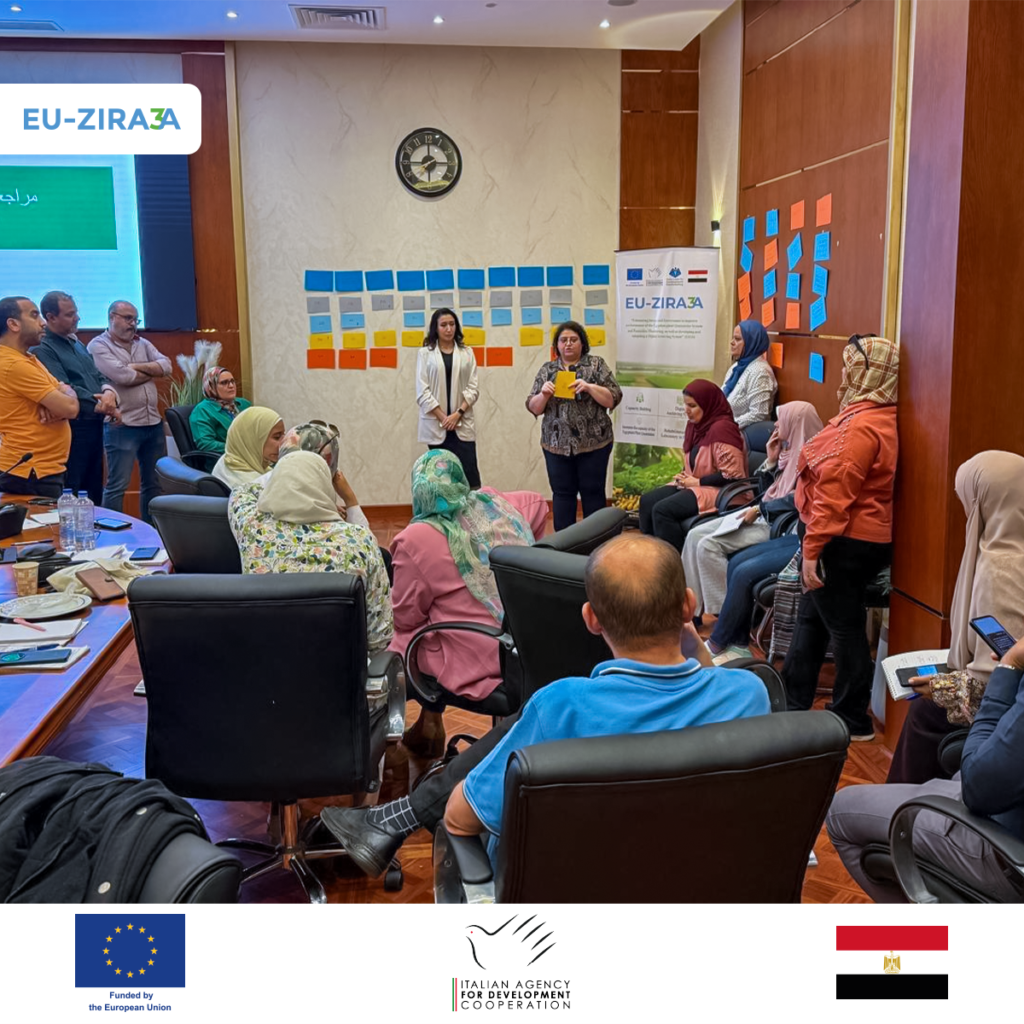
These sessions provided participants with a foundational understanding of the technical, regulatory, and procedural frameworks needed to carry out effective inspection and sampling operations.
Day Two: Practical Demonstration at Export Facilities
The second day of the training will be held on-site at a certified export farm and packing station, giving participants the opportunity to apply the knowledge gained during the theoretical sessions in a real operational setting.
The field component will feature:
- A technical presentation by Mr. Sven Thomas, Dutch expert in global quality systems and agricultural development
- Demonstrations of European best practices in visual inspection, sampling, and quality assurance
- Hands-on field exercises covering inspection procedures from farm to export
This practical exposure aims to equip engineers with a deeper understanding of inspection workflows, documentation standards, and export chain requirements.
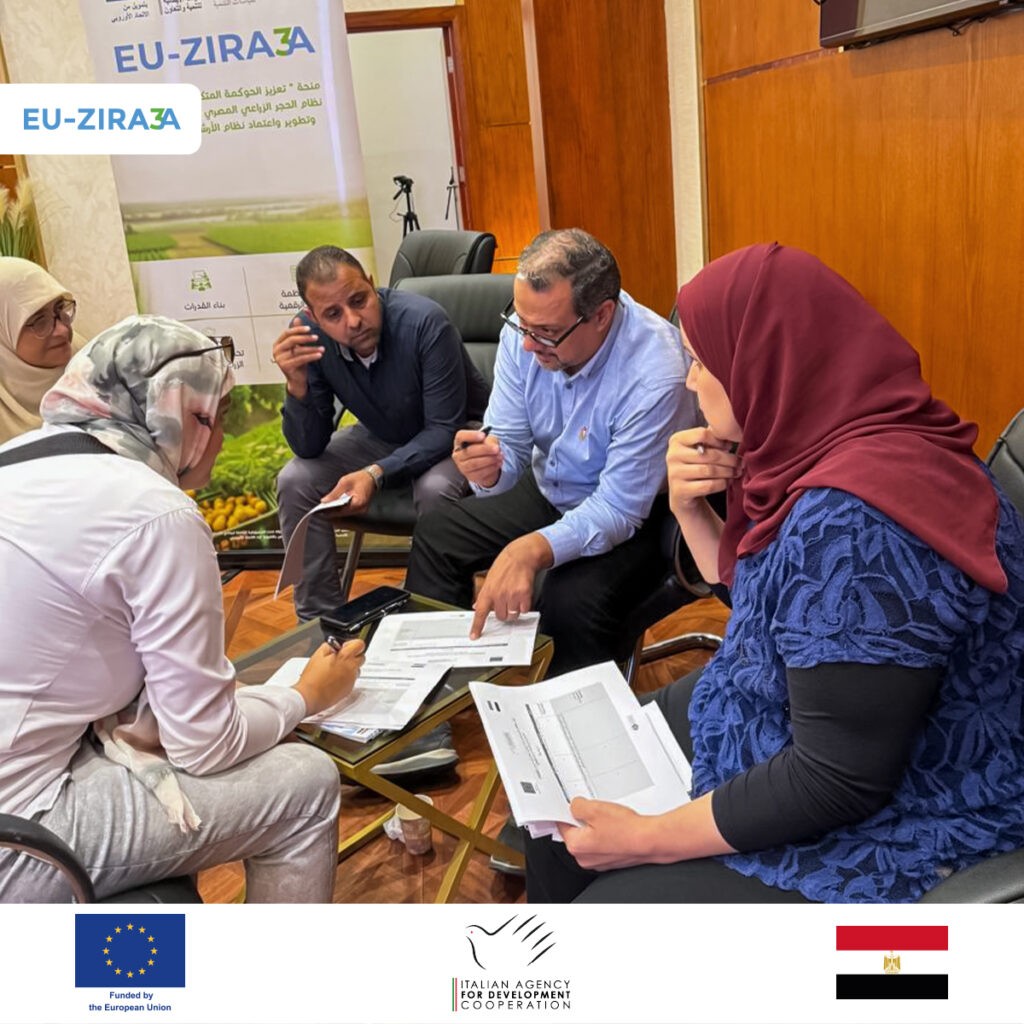
Opening Session and Participation
The launch of the training was attended by key representatives from partner institutions, highlighting the joint commitment to strengthening Egypt’s plant health and export readiness:
- Dr. Mohamed El-Mansy, Director of the Central Administration for Plant Quarantine
- Dr. Islam El-Fadly, representative of the Italian Agency for Development Cooperation (AICS Cairo)
- Dr. Maha Ismail, Executive Director of Cairo for Development Benchmarking (CDB)
- Dr. Islam Farahat, Head of the Plant Health Unit
Their participation underscores the national and international collaboration behind ongoing efforts to modernize plant quarantine systems and elevate quality assurance capacity across the agricultural sector.
Contributing to Agricultural Development and Export Readiness
This training represents a key milestone within the broader objectives of the EIGS Grant, supporting:
- Strengthened governance of plant quarantine processes
- Improved pesticide monitoring systems
- Development of streamlined digital archiving tools
- Enhanced capacity to meet global export standards
By empowering plant quarantine engineers with advanced skills and up-to-date techniques, the programme contributes to Egypt’s long-term vision of improving product quality, expanding export opportunities, and supporting sustainable agricultural development.