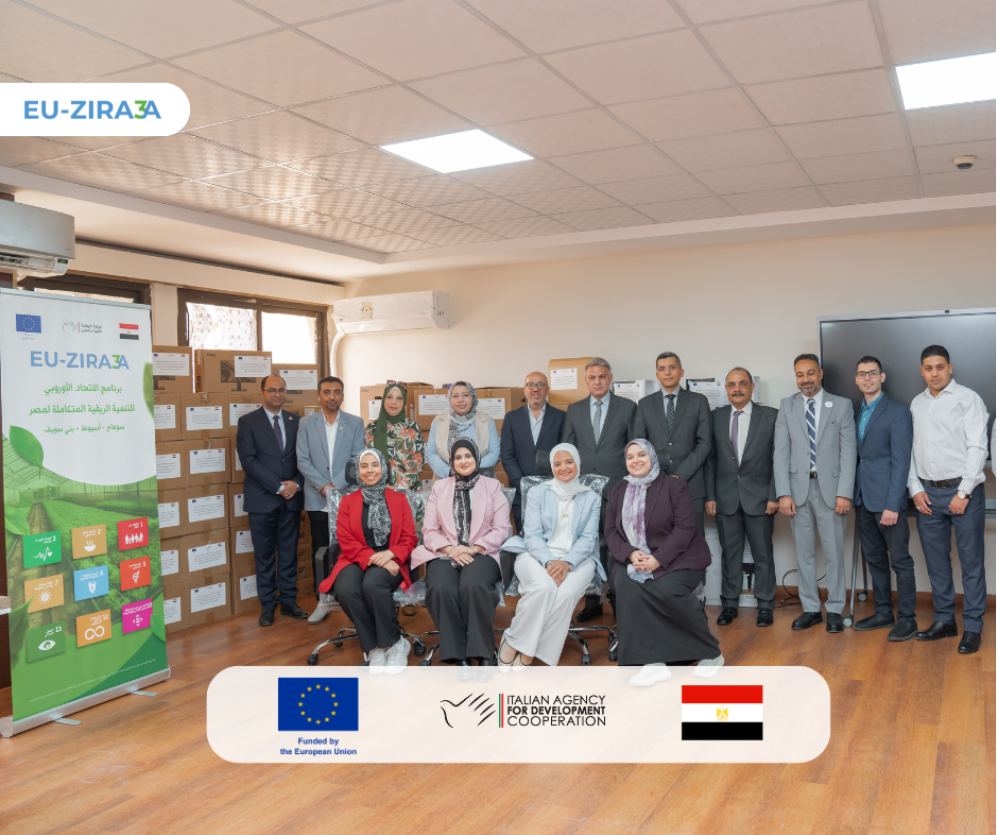



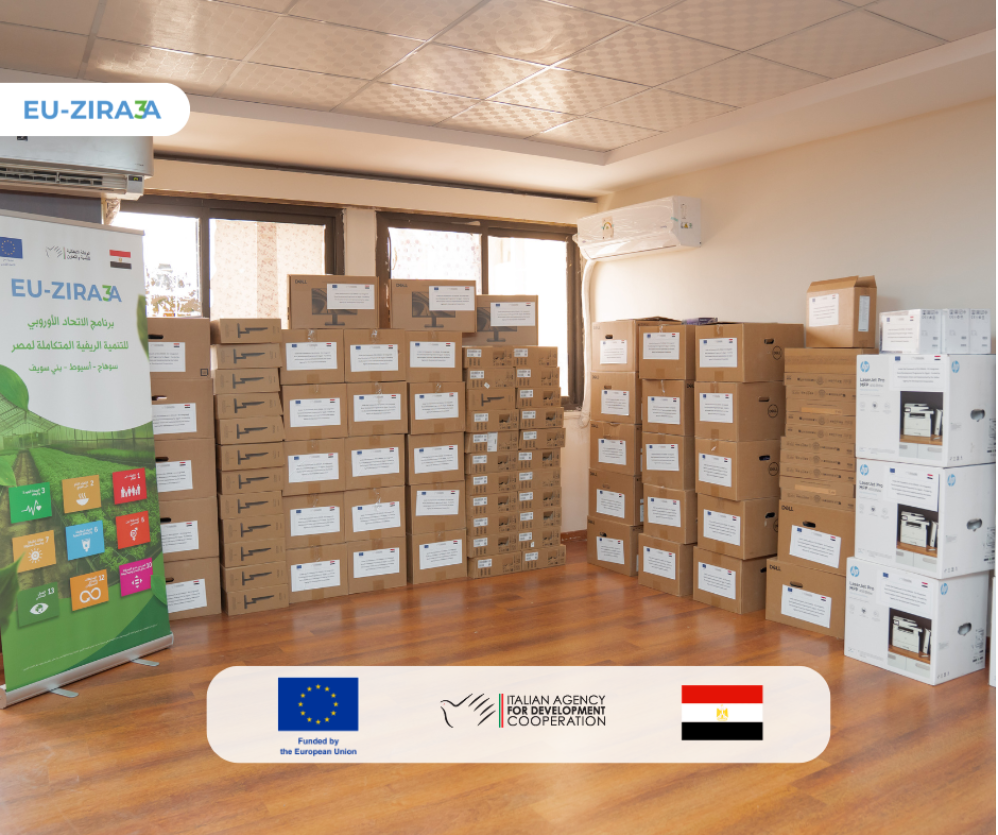
The EU-ZIRA3A Programme, funded by the European Union and implemented by the Italian Agency for Development Cooperation (AICS), continues to strengthen the capacities of the Central Administration of Egyptian Plant Quarantine (CAPQ) at the Ministry of Agriculture and Land Reclamation through the provision of technological equipment, office furniture, and support for the establishment of a new laboratory for the Egyptian Plant Quarantine system.
This support comes within the framework of activities implemented by the Cairo Center for Development Benchmarking (CDB) under the project “Enhancing Integrated Governance to Improve the Performance of Egyptian Plant Quarantine, Pesticide Residue Monitoring, and Developing a Digital Archiving System (EIGS).”
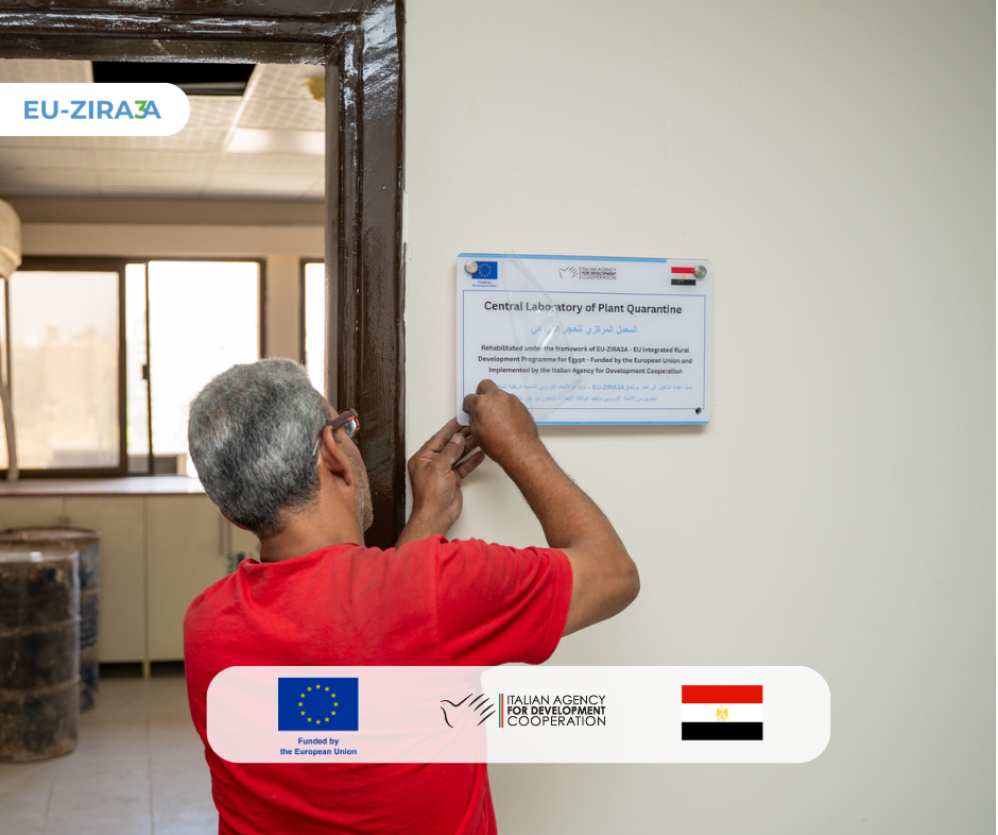
During the handover ceremony of the technological equipment, office furniture, and the new laboratory, Professor Dr. Ahmed Rizk, Head of the Agricultural Services Sector at the Ministry of Agriculture, emphasized that the event marks a culmination of the results achieved through the EU-ZIRA3A Programme in cooperation with the Central Administration of Plant Quarantine. He highlighted that the programme is considered one of the Ministry’s most important and distinguished initiatives. He noted that this intervention will enhance the efficiency of daily operations, facilitate inspection procedures and technical services, support the establishment of new units, and improve communication with exporters, thereby strengthening the growth and competitiveness of Egyptian exports. The intervention will also support Upper Egypt governorates within the project’s scope.
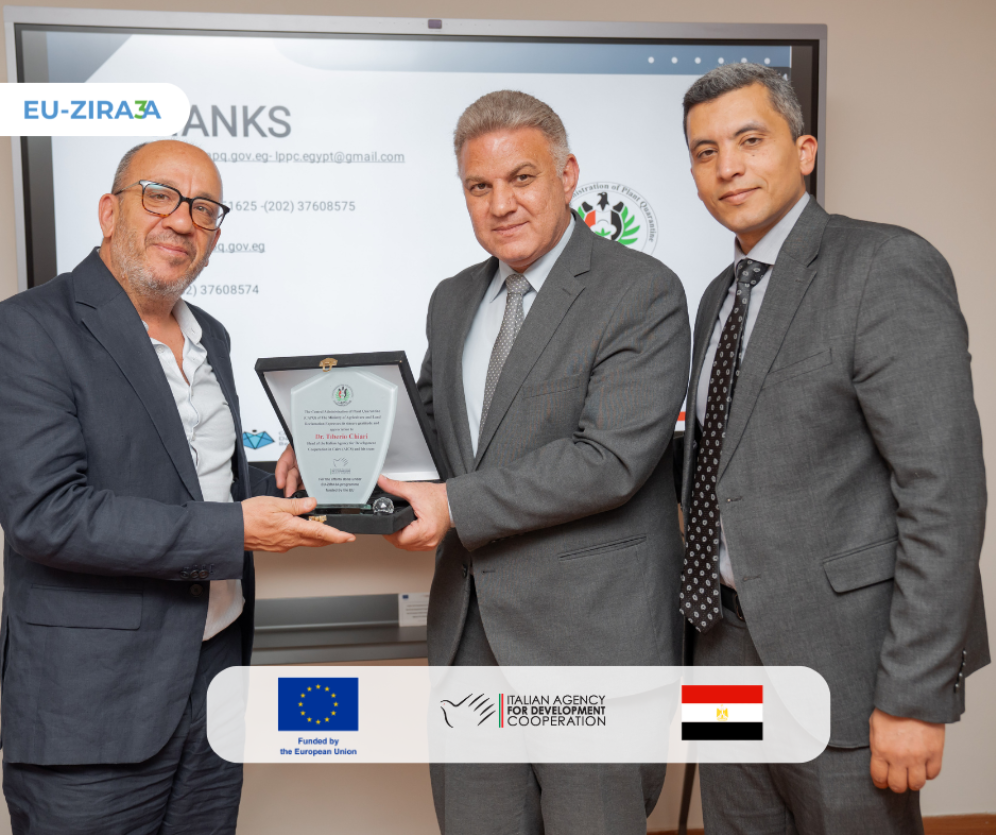
Dr. Mohamed El-Mensy, Head of the Central Administration of Egyptian Plant Quarantine, also stressed that cooperation between Egypt and the European Union goes beyond conventional collaboration and represents a long-standing partnership based on achieving development and mutual benefits for both sides. He explained that Egypt benefits from EU-funded development projects while also serving as an important partner in supplying numerous agricultural products. He further highlighted the critical role of plant quarantine in ensuring that Egyptian crops reach EU countries with the highest standards of quality and efficiency.
El-Mensy also announced the launch of the Central Plant Quarantine Laboratory at the administration’s headquarters through the EU-ZIRA3A Programme, describing it as a significant addition to the plant quarantine system. The laboratory will contribute to protecting Egyptian agricultural lands from the introduction or spread of quarantine pests, thereby supporting the smooth flow of trade, particularly with European Union countries. He added that the laboratory will facilitate Egyptian agricultural exports to the
EU and help reduce inspection rates imposed on exports, positively impacting export efficiency.
Dr. Islam El-Fadaly, Agriculture Sector Officer at the EU-ZIRA3A Programme, noted that the project continues supporting the qualification and technical capacity enhancement of human resources through training on international best practices in visual inspection procedures and handling technical challenges according to the latest global standards and experiences. This contributes to improving the quality of services provided by the Central Administration of Egyptian Plant Quarantine.
The event also included an inspection tour inside the Central Administration of Plant Quarantine, including the newly established central laboratory. During the tour, Dr. Mohamed El-Mensy presented an overview of the laboratory’s role and services, explaining that it has been designed and equipped according to the latest international standards. The laboratory contributes to facilitating inspection procedures through advanced and diversified equipment. He further noted that this effort comes within the framework of strengthening the plant quarantine protection system for agricultural exports, alongside improving institutional performance and enhancing staff capacities.As part of its continued support activities, the EU-ZIRA3A Programme also implemented capacity-building activities for Egyptian plant quarantine inspectors on visual inspection methods and sampling procedures for various crops, including pomegranates, oranges, medicinal and aromatic plants, and strawberries. A total of 215 inspectors benefited from these activities, achieving an impact exceeding 226% of the planned target. These efforts contribute to reducing inspection time and improving the efficiency of monitoring and testing Egyptian agricultural exports. Egypt has already achieved notable progress in this area, including reducing EU inspection rates on Egyptian citrus exports from 20% to 10%, in addition to strengthening the ability to detect non-compliant shipments before export.
The programme also contributed to developing technical and reference information systems for plant quarantine. In this context, the programme enabled a three-year subscription to the CAB International (CABI) scientific databases and digital specialized tools for a group of staff members from the Central Administration of Egyptian Plant Quarantine and the Plant Health Unit. Specialized training was also provided on how to use the platform, reflecting the programme’s commitment to enhancing technical knowledge and expertise among plant quarantine personnel, supporting early learning development, and strengthening understanding of key challenges, pests, and risks related to plant health.